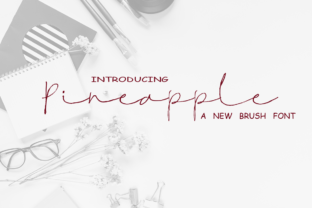
Pineapple Font: Modern Handwritten Style
As a small business owner, I know how important it is to create a brand that feels professional and consistent. One of the simplest yet most impactful tools for achieving this is the right font. Pineapple is a modern, handwritten calligraphy font that brings a natural, expressive style to your branding. Whether you're designing a logo, packaging, or social media posts, Pineapple adds a unique touch that helps your business stand out.
What Makes Pineapple Stand Out
Pineapple is more than just a font—it's a personality. Its handwritten style gives it a warm, approachable feel, while its clean lines and elegant curves make it versatile enough for both casual and professional settings. This balance makes it ideal for businesses that want to maintain a friendly yet polished image. The font’s natural flow mimics real handwriting, which can help build trust with customers who appreciate authenticity and craftsmanship.
Unlike rigid, mechanical fonts, Pineapple has a human quality that feels more personal. It works well for brands that want to convey creativity, care, and individuality. Whether you run a boutique, a café, or an online shop, Pineapple can help your brand feel more connected to your audience.
Real-World Applications for Pineapple
One of the best things about Pineapple is how adaptable it is across different business materials. For example, if you run a bakery, using Pineapple on your packaging or product labels can add a handcrafted feel that matches your brand’s identity. It also works well for handmade candle labels, where the font’s soft curves can complement the organic nature of your products.
For a coaching business or service provider, Pineapple can be used in logos, website banners, or social media graphics to create a sense of professionalism and approachability. When paired with a clean sans serif font like Arial or Helvetica, it becomes a powerful tool for creating visual hierarchy without overwhelming your audience.
In a café setting, Pineapple can elevate your menu design or signage. It adds a touch of elegance that complements coffee cups, menus, and even chalkboard signs. For online shops, using Pineapple in product titles or promotional banners can draw attention and create a cohesive look across your digital presence.
When to Use Pineapple
Pineapple is best suited as a headline or display font. It shines when used for logos, headings, or key brand elements that need to grab attention. However, it’s not ideal for long blocks of text due to its decorative nature. Instead, use it as an accent or supporting typeface to highlight important details like taglines, product names, or special offers.
When designing for print, such as business cards or packaging, make sure to test Pineapple at different sizes. While it looks great in larger formats, it may become less readable in smaller labels or on mobile screens. Always consider the context where your brand materials will be seen.
Testing Pineapple Before Full Adoption
Before committing to Pineapple for your entire brand, it’s wise to test it in different scenarios. Start by using it on a single project, like a new product label or social media graphic. Observe how it looks in various sizes and backgrounds. Does it hold up on dark or light backgrounds? Is it easy to read in small spaces?
You can also experiment with font pairing. Pairing Pineapple with a simple serif or sans serif font can create a balanced look that’s both stylish and functional. For example, using Pineapple for headlines and a clean sans serif for body text can make your content more engaging without sacrificing readability.
Font Pairing Tips for Business Use
When working with Pineapple, think about how it interacts with other fonts. A good rule of thumb is to pair it with a font that contrasts but complements its style. A classic serif font like Georgia or Times New Roman can add structure and formality, while a modern sans serif like Roboto or Open Sans keeps things clean and readable.
For digital marketing, Pineapple can be used in Instagram posts, Pinterest graphics, or Facebook ads to create eye-catching visuals. Just remember to keep the rest of your design elements simple so the font doesn’t get lost in the noise.
Commercial Licensing and Practical Considerations
Before using Pineapple on any commercial project—whether it’s packaging, merchandise, or client work—make sure you understand the licensing terms. Some fonts are only available for personal use, while others require a commercial license for business applications. Always check the font’s documentation to avoid legal issues.
As a small business owner, investing in a premium font like Pineapple can pay off in the long run. It helps create a cohesive brand identity that resonates with your target audience. Whether you’re launching a new product line or updating your website, Pineapple offers a fresh, creative way to express your brand’s personality.
Final Thoughts on Pineapple
Pineapple is more than just a font—it’s a tool for building a stronger, more recognizable brand. Its natural, handwritten style brings warmth and character to every design, making it perfect for businesses that want to connect with their customers on a personal level. By using Pineapple thoughtfully, you can enhance your brand’s visual appeal and create a lasting impression that stands out in a crowded market.